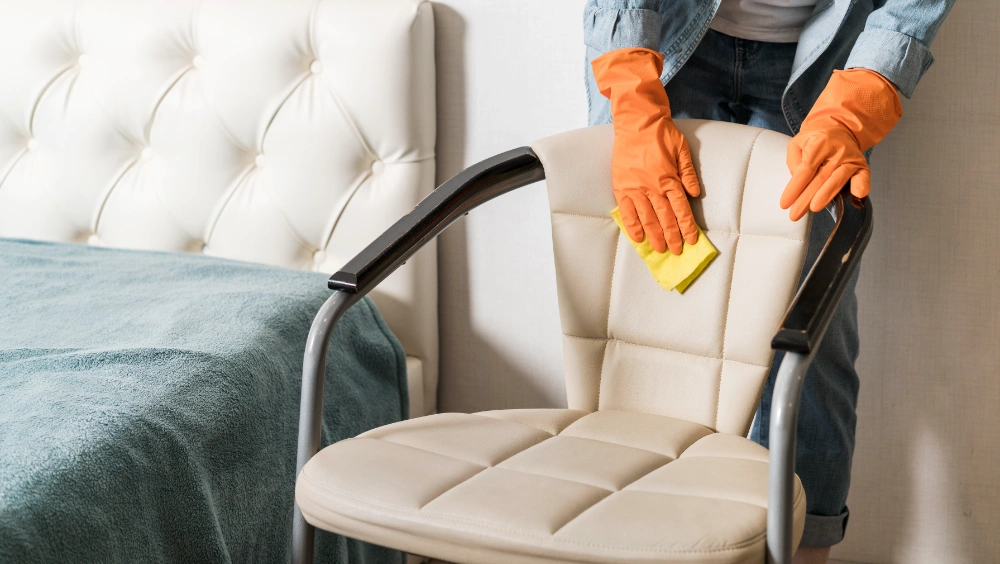
Fabric Code Assessment
W / S / WS / X — right chemistry for every piece
Wildfire Smoke Treatment
Alkaline pre-spray for PM2.5 embedded in upholstery fabric
Pet Odour Enzyme Treatment
Uric acid contamination addressed at the source
10-Day Guarantee
Same technician returns if the result is not right
Why Most Upholstery Cleaning Goes Wrong Before It Starts
Turn over the cushion on your sofa right now. Find the care tag — usually stitched to the bottom or side of the seat cushion. There is a letter on it: W, S, WS, or X. That letter is the manufacturer’s cleaning code and it determines exactly what chemistry can and cannot be safely used on that piece of furniture.
W means water-based cleaning agents only. S means solvent-based cleaning only — water will damage the fabric. WS means either can be used. X means no liquid of any kind — vacuuming and professional dry extraction only.
Most homeowners have never looked at this code. Most carpet cleaners who offer upholstery cleaning as a sideline do not ask about it before they start spraying. The result can be irreversible — water applied to an S-code fabric causes shrinkage, colour bleeding, and pile distortion that cannot be undone. We ask about fabric codes before we book, assess every piece before we apply anything, and use chemistry calibrated to what the manufacturer specifies.
The Wildfire Smoke Problem in Upholstery Fabric
Fabric absorbs wildfire smoke PM2.5 differently from carpet. Carpet pile is dense and vertical — smoke particulate settles into it from above. Upholstery fabric is typically woven and often has a pile or nap — the fibres run in multiple directions and trap PM2.5 across a larger surface area per square inch. In households where the sofa is the primary indoor gathering surface, the accumulated smoke from three or four Rogue Valley fire seasons can be significant.
In the Medford area, wildfire smoke is not a one-time event. Between 2017 and 2025, the region recorded 123 days with AQI at Unhealthy for Sensitive Groups or worse. Every smoke event deposits PM2.5 in upholstery fabric. A standard upholstery clean using neutral or mildly alkaline chemistry will improve appearance and reduce surface odour, but will not fully address embedded smoke particulate. We use alkaline pre-spray chemistry appropriate for PM2.5 contamination on smoke-affected pieces — combined with the correct base chemistry for the fabric code.
WHAT MAKES OUR APPROACH DIFFERENT
Four Things We Do That Others Skip
Fabric code check before anything is applied. W, S, WS, or X — assessed on every piece before we select chemistry. S-code fabric treated with water-based agents causes permanent damage. We do not take that risk.
Pile direction checked and respected. Velvet and velvet-blend upholstery has a directional pile — cleaning against the nap permanently distorts the pile structure. We always clean with the pile direction and always finish by brushing the nap back before we leave.
Wildfire smoke treatment when the fabric history warrants it. Alkaline pre-spray calibrated for PM2.5, not applied as standard chemistry over smoke-contaminated fabric.
Medford hard water sequestering on every water-based rinse. Mineral redeposition from Medford’s city water causes grey, stiff residue on fabric as rinse water evaporates. We treat every rinse with sequestered water calibrated for Rogue Valley water chemistry.
WHAT WE CLEAN AND HOW
Every Fabric Is Different — Here Is How We Approach Each One
Upholstery cleaning is not one process applied to every piece. Fabric type, construction, and the household’s specific history all affect what chemistry we use and how we apply it.
Synthetic Upholstery — Nylon, Polyester, Microfibre
The most common upholstery fabric in Medford homes. Generally W or WS coded. Responds well to hot water extraction with appropriate pre-treatment. Microfibre specifically requires split-fibre-safe chemistry — standard carpet cleaning agents can cause microfibre to mat and feel rough after cleaning. We use microfibre-specific chemistry and drying technique on every microfibre job.
Natural Fibre Upholstery — Cotton and Linen
W-coded in most cases but moisture-sensitive. Cotton can shrink under excess water or high heat. Linen is prone to water spotting if not rinsed and dried evenly. Both require controlled moisture application and careful drying — fans deployed, even air movement, no high-heat finish. In the Rogue Valley’s drier summer months, natural fibre upholstery dries well with proper technique. In winter, we adjust drying time expectations accordingly.
Wool and Wool-Blend Upholstery
S or WS coded depending on the specific weave and finish. Wool is pH-sensitive — alkaline chemistry above pH 8 will begin to damage wool fibres. We use wool-safe neutral pH chemistry on wool upholstery, with careful attention to water temperature (hot water causes wool to felt and shrink). In Rogue Valley homes that have been through multiple wildfire smoke seasons, wool upholstery holds smoke compounds particularly well — the treatment requires alkaline pre-spray in controlled concentration, balanced against the wool’s pH sensitivity.
Velvet and Velvet-Blend Upholstery
S-coded in most cases. This is the highest-risk fabric for incorrect cleaning. Velvet has a directional pile — short fibres standing upright in a specific orientation. Water applied to most velvet fabrics causes the pile to flatten, mat, and permanently distort in the direction of water flow. A velvet sofa cleaned with water-based chemistry by someone who does not understand velvet pile construction may look irreparably damaged afterward. We confirm fabric code and pile direction before touching velvet, use solvent-based chemistry where the code specifies S, and finish by carefully brushing the pile back before drying.
Leather and Faux Leather
Neither water-based upholstery cleaning nor standard carpet extraction methods are appropriate for leather. Genuine leather requires leather-specific cleaning agents and conditioner — water alone dries out the hide and can cause cracking. Faux leather (PU or PVC coating) is more tolerant but still requires pH-appropriate chemistry to avoid coating degradation. We clean both with leather-appropriate products and always finish genuine leather with a conditioner to restore moisture to the hide.
Mixed-Fabric and Patterned Pieces
Many modern sofas combine fabric types — a main body in microfibre with velvet or leather accent panels, or a cotton-linen blend with polyester trim. Each section may have a different fabric code. We assess each section individually, select compatible chemistry, and clean in sequence to avoid cross-contamination between sections with incompatible requirements.
THE PROCESS — EVERY JOB, EVERY PIECE
How We Clean — From First Assessment to Final Pile Brush
Nothing is applied to your furniture until we have assessed the fabric, confirmed the code, and selected the right chemistry. That assessment happens on every job — not just on pieces we think look complicated.
Fabric Code Assessment
We locate and check the care tag on every piece before we start. W / S / WS / X — this determines everything else. If there is no tag, we assess the fabric visually and by touch, conduct a spot test in a hidden area, and tell you what we find before proceeding.
Pre-Inspection and Condition Assessment
We identify areas of specific concern — pet contamination zones, staining, smoke-affected areas, pile distortion. We tell you before we start what we expect the result to be for each area. If something cannot be resolved by cleaning, we say so before applying any chemistry.
Pre-Vacuuming and Dry Soil Removal
Loose soil, pet hair, and dry debris removed before any liquid is applied. Applying chemistry over dry soil creates a slurry that is pushed into the fabric. On upholstery, which cannot be easily rinsed through the way carpet can, this residue is difficult to fully extract.
Pre-Treatment — Calibrated to Fabric and History
The right pre-treatment for what is actually in the fabric. Pet contamination gets enzyme pre-spray. Smoke-affected pieces get alkaline pre-spray where the fabric code permits. Staining gets appropriate stain treatment. General soiling gets pre-treatment matched to the fabric type. Nothing is applied as standard regardless of what the piece is holding.
Cleaning — Method and Equipment Matched to Fabric
W and WS coded fabrics: low-moisture hot water extraction with upholstery wand. S coded fabrics: solvent-based cleaning with appropriate dry-cleaning technique. X coded fabric: professional dry extraction only. Velvet: solvent where S coded, with pile direction maintained throughout. Leather: leather-specific cleaning agents with no excess moisture.
Rinse with Sequestered Water
Water-based cleans rinsed with water treated for Rogue Valley hard water chemistry. Mineral redeposition from unsoftened water leaves grey, stiff residue on fabric fibres as the water evaporates. We prevent this on every water-based upholstery job.
Fan Drying and Airflow
Fans deployed on every upholstery job. Fabric that is damp for extended periods can develop mildew and odour — particularly in the Rogue Valley’s wetter winter months. We deploy drying fans and tell you the expected dry time before we leave.
Pile Restoration and Final Check
Velvet and directional pile fabrics brushed back to their natural orientation before drying. Final walk around every piece before we leave. Any areas that need re-treatment addressed on the spot.
REAL UPHOLSTERY JOBS — MEDFORD & ROGUE VALLEY
Three Jobs — What the Fabric Was, What We Found, What Happened
Every detail is real. Every result is what actually happened.
CASE STUDY 01
Hillcrest: Velvet Sofa, Previous Cleaning Attempt Left Pile Permanently Marked
📍 Hillcrest, Northwest Medford
🔧 S-code velvet upholstery · 3-seat sofa · significant pile distortion from previous clean
📋 Previous carpet cleaner had cleaned it with water · large sections matted and flattened
The homeowner in Hillcrest called with a specific problem: a cleaning company had cleaned her velvet sofa six months prior using the same water-based extraction method they used on the carpet. The sofa now had large sections of matted, flattened pile where the water had flowed during cleaning. The original deep teal colour was still there — the damage was structural, not chemical — but the pile in the affected areas lay flat in the direction the water had run, and the sofa looked streaked and worn.
Pre-inspection confirmed what we expected: the sofa was S-coded — solvent-only. The care tag was still attached and clearly legible. The previous cleaner had either not checked it or not understood what S meant. The pile distortion was real but not fully permanent — velvet pile that has been water-distorted can sometimes be partially restored by careful dry cleaning and pile brushing, particularly if the cleaning was relatively recent. Six months was within the recovery window for this type of velvet.
We cleaned with solvent-based chemistry appropriate for S-coded velvet, worked carefully with the pile direction throughout, and used a specialised velvet pile brush to encourage the distorted sections back to their natural orientation during the drying process. The result was not a perfect restoration — some sections retained slight flattening — but the sofa was significantly improved and the streaking effect eliminated. We told the homeowner before we started what to expect: significant improvement, not guaranteed full restoration. The result was at the better end of that range. She asked us to clean her wool area rug on the same visit.
CASE STUDY 02
South Medford: Microfibre Sectional, Pet Contamination and Smoke Season History
📍 South Medford, 97504
🔧 W-code microfibre sectional · 5-seat L-shape · two cats · occupied during 2022 smoke season
📋 Persistent pet odour · visible soiling on seat cushions · smoke smell when HVAC ran
The South Medford family had a large microfibre sectional that had served as the primary living room seating for two cats for three years. The visible soiling on the seat cushions was manageable — microfibre hides soil reasonably well — but the pet odour was persistent and had gotten worse during the previous autumn when the heating came on for the first time. They had also noticed the sofa smelled faintly smoky, which they initially attributed to the cats before connecting it to the fact that the smell was strongest when the HVAC was running.
Pre-inspection confirmed what we suspected: pet contamination concentrated at the seat cushion level and along the armrests — the surfaces where cats habitually sit and rub. The smoke smell was PM2.5 from the 2022 wildfire smoke season embedded in the microfibre. Microfibre is a split fibre construction — very fine synthetic fibres that create a large surface area per square inch. This makes it excellent at repelling liquid spills but very effective at trapping PM2.5 and other fine particulate. The sofa had accumulated two years of smoke over two fire seasons.
We applied enzyme pre-spray on all contamination zones and alkaline pre-spray on the full sofa surface for PM2.5 treatment, each with appropriate dwell time. Microfibre-specific extraction chemistry that would not cause pile matting. Full extraction with the upholstery wand, fan drying. The pet odour cleared fully. The smoke smell reduced approximately 80% on the day and was no longer noticeable after the sofa dried completely. The homeowner confirmed the following week that the heating had come on twice and the smoky smell had not returned. They booked a carpet clean for the same time of year the following autumn.
CASE STUDY 03
Eagle Point: Wool-Blend Loveseat, Hard Water Redeposition from Previous DIY Clean
📍 Eagle Point, 97524
🔧 WS-code wool-blend upholstery · 2-seat loveseat · greyish stiff patches across seat cushions
📋 Previous DIY clean with rental machine · mineral redeposition from hard Eagle Point water
The Eagle Point homeowner had cleaned the loveseat herself using a rental upholstery machine six weeks prior. The result had been initially good but the fabric had dried with a greyish, stiff cast across the seat cushions that looked like new staining. She had tried rinsing the affected areas with water, which had made it slightly worse. She thought the machine had damaged the fabric.
Pre-inspection immediately identified the issue. Eagle Point’s water supply is notably hard — higher mineral content than Medford’s city water — and the rental machine she had used was not equipped with a sequestering rinse. When the unsoftened rinse water had evaporated from the wool-blend fabric, it left a deposit of dissolved calcium and magnesium minerals on the fibres. This is the same mineral redeposition that affects carpet cleaned with unsoftened hard water, but on wool-blend upholstery it is more visible because the fibres are finer and the deposit coats them more evenly. It looked like staining but was purely mineral deposit — no fabric damage had occurred.
We applied a mild acid rinse — appropriate for WS-coded wool-blend fabric and effective at dissolving calcium and magnesium mineral deposits — with sequestered water to prevent further redeposition, and extracted carefully with low moisture to avoid over-wetting the wool-blend. The grey, stiff areas softened during treatment and the mineral cast cleared significantly. After drying with fans, the loveseat looked close to its original condition. The homeowner was relieved — she had been convinced the fabric was permanently damaged. We explained the cause and recommended sequestered water be used on any future DIY attempts, or to call us for the next clean.
WHAT MEDFORD HOMEOWNERS SAY
Three Jobs, Three Results, Three Honest Assessments
“I genuinely thought the sofa was ruined. The previous cleaner had no idea it was an S-code and used water on velvet. These guys were honest with me about what they could and could not fix before they started, and the result was significantly better than I expected. Not perfect but genuinely close.”
— Patricia H. — Hillcrest, Northwest Medford
Velvet sofa · S-code · pile distortion from previous water-based clean · partial restoration
“The smoke smell coming from the sofa when the heating came on was the thing that finally made me call. They explained exactly why it was happening and treated it specifically. The smell is completely gone. They cleaned it differently from how carpet cleaners usually clean upholstery — microfibre-specific chemistry — and it actually stayed soft and clean instead of matting up afterward.”
— Kevin and Amy R. — South Medford (97504)
Microfibre sectional · two cats · PM2.5 smoke treatment + enzyme pet treatment · full result
“I was convinced I had damaged it with the rental machine. They identified the problem as hard water mineral redeposition in about thirty seconds and fixed it. I had no idea that was even a thing. Loveseat looks like new. Very glad I called before I did anything else to it.”
— Carol B. — Eagle Point (97524)
Wool-blend loveseat · mineral redeposition from DIY hard water rinse · acid rinse treatment
QUESTIONS ANSWERED HONESTLY
What Medford Homeowners Ask Before They Book
Ready to Book Upholstery Cleaning in Medford OR?
Fabric code assessed before anything is applied. Wildfire smoke treatment when the fabric and history warrant it. 10-Day Guarantee. Serving Medford, Ashland, Central Point, Eagle Point, Grants Pass, Talent, and all of Jackson and Josephine County. Call (541) 622-0999 for a straight answer on whether we can help your specific piece.
FIND US IN MEDFORD, OREGON
Carpet Cleaners Medford
📍 925 N Central Ave
Medford, OR 97501
🕐 Mon–Fri 8am–6pm
Saturday 9am–5pm
🌎 Serving Medford · Central Point · Ashland · Eagle Point · White City · Talent · Jackson County
© 2026 Carpet Cleaners Medford. All rights reserved.